Navigating Complex Insurance Policies in Commercial Trucking Accident Cases
The highways of Mississippi serve as vital arteries for commerce. Every day, thousands of commercial trucks traverse the I-10 corridor connecting Louisiana and Alabama, or haul heavy timber and agricultural goods down Highway 49 and Highway 98. While this freight traffic is essential for the economy of the Gulf Coast and the Pine Belt, it introduces a significant risk to local residents. When an 80,000-pound tractor-trailer collides with a passenger vehicle, the physical devastation is often catastrophic. However, the legal aftermath is equally complex.
Commercial trucking accidents are not simply larger car wrecks. They are governed by a distinct set of federal regulations and involve layered insurance policies that far exceed the complexity of standard personal auto coverage. For victims in Harrison, Jackson, and Hancock counties, understanding these insurance structures is the first step toward securing the resources needed for recovery.
The Reality of Commercial Insurance Layers
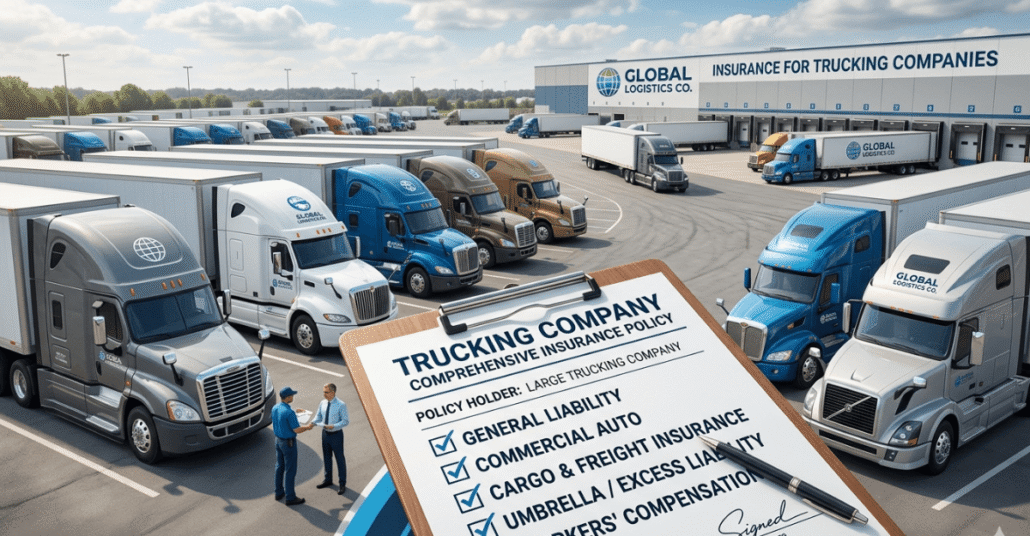
In a standard car accident on Beach Boulevard in Biloxi, you typically deal with two policies: your own and the other driver’s. In a commercial trucking case, the insurance landscape is vertical. Commercial carriers often employ a tower of insurance coverage to protect their assets. This tower typically starts with a primary liability policy, which is the first line of defense. Above that, there may be excess policies or umbrella coverage designed to kick in only after the primary limits are exhausted.
Identifying every layer of this tower is critical. If a victim suffers a traumatic brain injury requiring long-term care at a facility like the Methodist Rehabilitation Center or extensive surgery at Singing River Hospital, the primary policy limit may be insufficient to cover lifetime medical costs. We often see cases where the initial insurance adjuster attempts to settle quickly for the primary limit, conveniently failing to mention the existence of a multimillion-dollar umbrella policy sitting above it.
Determining Liability and Coverage Limits
The Federal Motor Carrier Safety Administration (FMCSA) dictates the minimum insurance requirements for interstate carriers. These minimums depend heavily on the type of freight being hauled. For general freight, the minimum is typically $750,000. However, for specialized carriers hauling oil, fuel, or hazardous materials along industrial routes near the Port of Gulfport or the Bayou Casotte Industrial Center in Pascagoula, the federally mandated minimums can rise to $1,000,000 or even $5,000,000.
These federal minimums are merely the floor. Responsible trucking companies usually carry significantly higher limits to protect themselves from the high verdicts common in serious injury cases. A thorough investigation must verify the specific operating authority of the truck at the moment of the crash. Was the driver operating interstate (crossing state lines) or intrastate (staying solely within Mississippi)? This distinction can alter the applicable insurance minimums and the regulatory framework governing the claim.
How Much Insurance Coverage is Actually Available after a Commercial Truck Accident in Mississippi?
Federal law mandates minimum liability limits between $750,000 and $5,000,000, depending on the cargo type and vehicle weight. However, many reputable carriers hold umbrella policies exceeding these amounts. Identifying all layers of coverage is essential to securing full compensation for catastrophic injuries.
Most commercial policies are written with a Combined Single Limit (CSL). Unlike personal auto policies that might split limits for bodily injury per person and property damage, a CSL provides one lump sum for all damages arising from a single accident. This creates a race against time if there are multiple vehicles involved in the crash. If a pileup on I-110 injures five people, that single limit must cover everyone. The funds can deplete rapidly.
What Happens if the Trucking Company’s Insurance Policy was Denied or Cancelled?
The MCS-90 endorsement acts as a federal safety net for the public. It obligates the insurer to pay a final judgment against the motor carrier even if the underlying policy terms were violated, the truck was unscheduled, or coverage was technically void.
The MCS-90 applies specifically when the underlying policy does not provide coverage due to an exclusion or breach of contract by the trucking company. For example, if a trucking company fails to pay its premium but the insurer has not yet properly notified the FMCSA of the cancellation, the MCS-90 may still compel the insurer to pay for an accident occurring during that window.
This endorsement serves a vital public policy interest. It prevents trucking companies from operating dangerous vehicles on Mississippi roads without financial responsibility. It shifts the burden of risk from the innocent victim to the insurance company. The insurer is in a better position to underwrite the risk and recover funds from the motor carrier than an injured family in Gulfport or Ocean Springs.
However, invoking the MCS-90 is not automatic. It requires a final judgment against the motor carrier. Insurance companies will rarely volunteer that this endorsement exists or that it applies to your situation. They will often issue a denial letter based on a policy exclusion and hope the claimant accepts it as the final word. Experienced legal counsel understands that a denial letter is often just the beginning of the negotiation in a commercial case. We litigate to obtain the necessary judgment that triggers the MCS-90 obligation.
We analyze specific criteria to determine MCS-90 applicability:
- Interstate Commerce: The endorsement generally applies to vehicles involved in interstate commerce, though judicial interpretations can vary regarding the specific trip’s nature.
- No Coverage: It is only triggered when the underlying policy provides no coverage for the accident.
- Public Protection: It pays only for public liability (bodily injury, property damage, and environmental restoration), not for the defense costs of the trucking company.
- Reimbursement Rights: The insurer retains the right to sue the trucking company to recover amounts paid under the MCS-90, a fact that often motivates insurers to settle claims rather than litigate coverage disputes.
Can I Sue Parties Other Than the Truck Driver for my Injuries?
Yes. Liability often extends to the trucking company for negligent hiring, the cargo loader for improper weight distribution, maintenance vendors for brake failures, or logistics brokers who negligently selected an unsafe carrier for the route.
Third-party liability is a fertile ground for investigation. Many trucking companies outsource their maintenance to local shops in hubs like Hattiesburg or Jackson. If a brake failure caused the accident, we pull the maintenance logs. If a shop certified the brakes were safe when the pads were actually worn to the metal, that maintenance provider shares liability for the crash.
Similarly, improper loading is a frequent cause of jackknife and rollover accidents. If a third-party logistics company loaded a container at a warehouse in Meridian and failed to balance the weight or secure the cargo, the truck becomes unstable. When that truck takes a curve on a highway on-ramp, the load shifts, taking the truck over with it. The driver may have been driving perfectly, yet the accident was inevitable due to the loader’s negligence.
How Do Federal Hours-of-Service Rules Affect a Trucking Accident Claim?
The FMCSA imposes strict limits on how many consecutive hours a commercial driver may operate without a mandatory rest period. A driver is generally prohibited from driving more than 11 hours after 10 consecutive hours completely off duty. Violations of these rules are powerful evidence of negligence and are frequently connected to fatigue-related crashes on Mississippi’s commercial corridors.
Fatigued driving is a systemic problem in the commercial trucking industry. The economic pressure to meet tight delivery schedules along high-volume routes like I-10 and Highway 49 creates an incentive for drivers and companies to push beyond legal limits. When a serious crash occurs during overnight hours near the industrial parks of Pascagoula or approaching the Port of Gulfport, driver fatigue is always an immediate investigative priority.
Key hours-of-service rules that may be violated in your case include:
- The 11-Hour Driving Limit: A driver may not operate a commercial vehicle for more than 11 cumulative hours after taking 10 consecutive hours off duty, regardless of how short the remaining trip distance may be.
- The 14-Hour On-Duty Window: All driving must be completed within a 14-hour on-duty window. Once this window closes, no further operation is permitted until the mandatory rest period is fully completed.
- The 60/70-Hour Weekly Rule: Over a period of seven or eight consecutive days, a driver may not exceed 60 or 70 total on-duty hours, respectively. This prevents the accumulation of chronic fatigue across multi-day hauls along long interstate routes.
- Logbook Falsification: While mandatory ELD adoption has reduced paper log falsification, electronic data can still be manipulated. We retain forensic data specialists who can identify anomalies in digital log files that suggest hours were deliberately disguised.
What Role Does Federal Regulation Play in My Mississippi Trucking Case?
Commercial trucking is one of the most heavily regulated industries in the United States. The FMCSA sets enforceable minimum standards for driver qualification, vehicle maintenance, cargo securement, and financial responsibility. Any violation of these federal safety standards by the carrier or driver can be used to establish negligence per se in a Mississippi civil case.
Establishing negligence per se means that a regulatory violation is treated as conclusive evidence of negligent conduct, substantially strengthening the victim’s claim and shifting the burden of justification to the defendant. Our practice routinely reviews FMCSA databases and examines the carrier’s Compliance, Safety, Accountability scores as part of every commercial trucking investigation.
Federal regulations that frequently come into play in Mississippi trucking cases include:
- CSA Safety Scores: The FMCSA publicly posts performance data for every registered carrier. Repeated violations in categories like driver fitness, hours of service, or vehicle maintenance indicate a known and recurring safety problem that management failed to correct.
- Cargo Securement Standards: Federal rules prescribe specific tie-down configurations based on load type and weight. Improperly secured cargo that shifts in transit is a leading cause of jackknife and rollover accidents at highway curves and on-ramps throughout the state.
- Drug and Alcohol Testing Requirements: Drivers must pass pre-employment, random, post-accident, and reasonable-suspicion drug and alcohol screenings. A failed post-accident test is often the most powerful single piece of evidence available in a negligence case.
- Minimum Insurance Requirements: The FMCSA mandates specific liability minimums based on cargo type. Identifying every layer of a carrier’s insurance tower, from the primary policy to excess and umbrella coverage, is essential to securing adequate compensation for catastrophic injuries.
Frequently Asked Questions About Commercial Trucking Accident Claims
How do I know if the truck that hit me was operating legally?
Your attorney can query the FMCSA’s SAFER database using the truck’s Department of Transportation number to verify the carrier’s operating authority, insurance filings, and inspection history. This search is conducted within the first hours of our investigation and often reveals existing safety violations predating the crash.
Can I recover damages if the trucker was classified as an independent contractor?
Yes. Under the FMCSA’s doctrine of statutory employment, motor carriers are responsible for the safety performance of drivers operating under their authority regardless of independent contractor classification. Courts have consistently held that a carrier cannot use contract labels to escape liability for accidents caused by drivers hauling under its operating permit.
What if the trucking company files for bankruptcy after the accident?
A carrier’s bankruptcy does not eliminate your claim. The MCS-90 endorsement may still compel the insurer to satisfy a judgment. We also identify all related corporate entities, parent companies, and other potentially liable parties — including shippers, brokers, and maintenance vendors — to ensure the full scope of available recovery is pursued.
Should I give a recorded statement to the trucking company’s insurance adjuster?
No. You have no legal obligation to provide a recorded statement to the other party’s insurer. Insurance adjusters are trained to ask questions designed to elicit responses that minimize or redirect liability. All communication with the commercial carrier’s insurance company should be routed through your legal counsel from the moment you retain representation.
How long do I have to file a commercial trucking accident claim in Mississippi?
Mississippi’s statute of limitations for personal injury claims is three years from the date of the accident. However, trucking cases require immediate action because critical electronic evidence has short retention windows. Contacting an attorney within days of the crash — not months — is the only reliable way to preserve the full evidentiary record before it is overwritten or legally purged.
Contact Gardner Law Group
The aftermath of a commercial trucking accident is a chaotic time for victims and their families. You are dealing with physical pain, mounting medical bills, and the loss of income. Meanwhile, the trucking company and its insurers are already building their defense. The Gardner Law Group serves clients across the Mississippi Gulf Coast and throughout the state. We have the resources to take on major commercial carriers and the expertise to navigate the complex insurance policies that govern these claims. We do not let insurance towers or corporate structures hide the assets you are owed.
To schedule a consultation, please call us or complete our online contact form. Let us handle the legal complexity so you can focus on your recovery.