
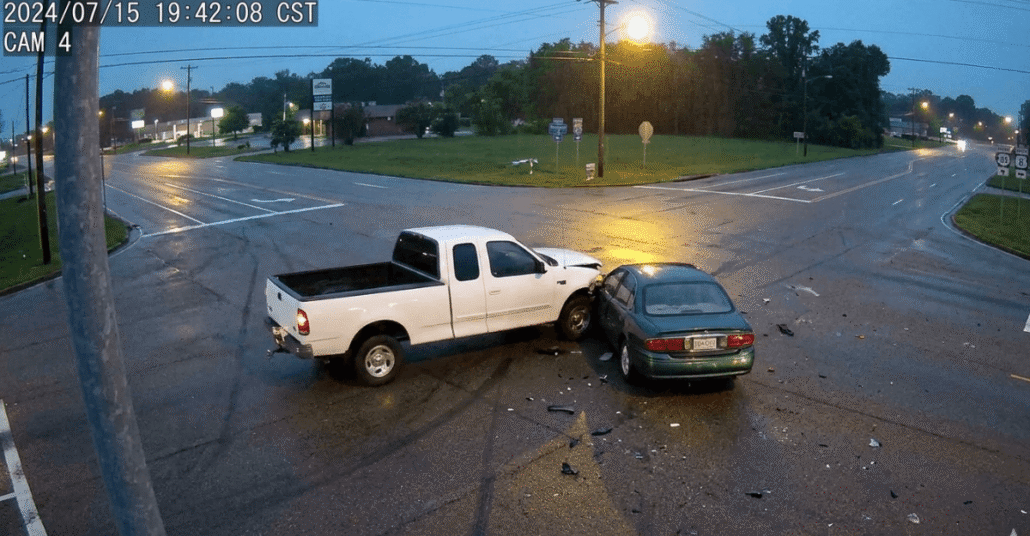
The Role of Surveillance Footage in Mississippi Auto Accident Claims
A collision on Highway 90 or a chaotic pileup on I-10 often leaves victims disoriented and unsure of exactly what happened. In the moments after a crash, adrenaline runs high, and memories can become blurred. You might recall a green light, while the other driver insists it was red. You might remember driving at the speed limit near the Biloxi Lighthouse, while the other party claims you were speeding. In Mississippi personal injury law, these disputes often devolve into a frustrating battle of word against word.
This is where surveillance footage becomes the impartial arbiter of truth. Unlike witness testimony, which can change over time or be influenced by bias, video evidence provides an objective timeline of the event. It captures the speed, the weather conditions, the traffic flow, and the precise moment of impact. For residents of the Mississippi Gulf Coast, understanding how to locate, preserve, and utilize this footage is a critical component of building a successful claim for compensation.
How Can I Get Traffic Camera Footage in Mississippi?
Traffic camera footage in Mississippi is rarely recorded for long-term storage, as MDOT cameras are primarily used for live monitoring rather than surveillance. You must act immediately to have an attorney send a preservation letter if any recording does exist.
The Mississippi Department of Transportation operates numerous cameras along major corridors like I-10, I-110, and Highway 49 to monitor traffic flow and weather conditions. Drivers often assume that these cameras are constantly recording and archiving every second of footage. Unfortunately, this is a common misconception. Most of these feeds are live-streamed to traffic management centers to help clear congestion or respond to emergencies, but they are not always set to record or store data for public retrieval.
Is Dashcam Footage Always Admissible in Mississippi Courts?
Yes, dashcam footage is generally admissible in Mississippi courts provided it is properly authenticated and relevant to the facts of the case. It serves as objective evidence to corroborate your version of events against conflicting witness testimony.
The use of personal dashcams has skyrocketed across the Gulf Coast. These devices are inexpensive and provide peace of mind for drivers who want to protect themselves from fraud or false accusations. In a legal setting, dashcam video is treated like any other piece of demonstrative evidence. It must be relevant to the issues at hand, and it must be authenticated.
Authentication simply means proving that the video is what the proponent claims it to be. This usually involves testimony from the person who recorded it, stating that the video accurately depicts the events as they occurred. The video must not be altered, edited, or tampered with in any way. Modern dashcams often embed GPS data and speed readings directly into the video file, which adds another layer of verification.
Defense attorneys and insurance adjusters will try to challenge dashcam footage if it hurts their case. They may argue that the camera angle distorts the distance between vehicles or that the wide-angle lens makes speeds appear higher than they were. They might claim the date and time stamp on the device was set incorrectly. Anticipating and countering these technical arguments is part of preparing a robust case file.
- The video must be an accurate and unaltered representation of the accident.
- GPS and speed data embedded in the file can strengthen the evidence.
- A proper chain of custody must be maintained to prevent claims of tampering.
- Both front-facing and rear-facing cameras provide valuable context for rear-end collisions.
Can I Use Footage from a Nearby Business for My Car Accident Case?
You generally cannot demand footage from a private business without a subpoena or a preservation letter drafted by an attorney. Most businesses will not release security video voluntarily due to privacy policies and liability concerns.
It is a frustrating reality for many injury victims. You can see the camera on the side of the building. You know it pointed right at the intersection where you were T boned. Yet, when you ask the manager for the tape, they refuse. This is not necessarily because they want to hide the truth, but because they are bound by strict corporate policies.
Large corporations are risk-averse. They view the release of surveillance footage as a potential security breach. Furthermore, extracting the footage often requires access to the server room or password-protected software that shift managers do not possess. They simply do not have the authority to help you.
The Challenge of Video Quality and Interpretation
Possessing footage is not the same as winning the case. Raw video can be grainy, dark, or filmed from an obscure angle. A camera mounted high on a pole might flatten the perspective, making it difficult to judge depth. Nighttime accidents on poorly lit stretches of I-10 can result in video that is mostly glare and shadows.
We work with forensic video analysts who can enhance low-quality footage. These professionals can clarify images, adjust lighting levels, and calculate vehicle speeds based on fixed points in the video frame. They can stabilize shaky video and zoom in on critical details like traffic signal colors or license plate numbers.
Interpretation is also a battleground. The defense may look at the same video and argue a different narrative. They might claim that the footage shows you could have swerved to avoid the crash. We use the video to show that the reaction time available was insufficient for any human driver to avoid the collision. We frame the visual evidence within the context of Mississippi traffic laws and realistic human performance.
Preserving Evidence in the Digital Age
The digital nature of modern evidence makes it fragile. A video file can be corrupted, deleted, or lost in a system update. Physical storage devices can be damaged. The “cloud” is not a permanent vault unless specific steps are taken to pay for storage and prevent overwriting.
In cases involving severe injuries treated at major regional centers like the University of Mississippi Medical Center or Singing River Hospital, the damages are serious, and the stakes are higher. Insurance companies for commercial trucking fleets or large defendants will move quickly to control the narrative. They will have their own investigators on the scene within hours, looking for cameras and securing evidence that favors them.
You need a legal team that moves with equal speed and determination. We understand the layout of the local jurisdictions, from the Harrison County Circuit Court to the winding back roads of the Pine Belt. We know where the cameras are likely to be and how to ask for them.
How Long Do Businesses and Traffic Systems Retain Surveillance Footage?
Retention periods vary widely, and that variation is precisely why prompt action is so critical. Most retail businesses overwrite their security footage on a 14- to 30-day rolling loop. Traffic management systems may discard data even sooner. Once footage is overwritten by a new recording, it is almost always unrecoverable, no matter how sophisticated the retrieval technology. Early legal intervention is the only reliable safeguard.
The practical implication is that the clock starts immediately after your accident. While you are receiving treatment at Garden Park Medical Center, the camera mounted on the adjacent gas station or strip mall may already be counting down the days until your most critical piece of evidence is permanently erased. Our office issues evidence preservation letters as the first action in every new auto accident case we open.
Typical retention windows for different camera systems across the Gulf Coast include:
- Retail Stores and Gas Stations: Locations along Beach Boulevard and Pass Road typically overwrite footage on 30-day cycles, though some high-volume national retailers maintain 60- to 90-day archives due to internal loss-prevention policies.
- Hotels and Casino Properties: Properties along the Biloxi casino corridor often operate extensive camera systems with longer retention periods, typically 60 to 90 days, driven by their own liability exposure and gaming commission requirements.
- Banks and ATM Locations: Financial institutions typically retain footage for 30 to 45 days due to federal fraud monitoring obligations, and their cameras often capture substantial activity on adjacent streets and intersections.
- Traffic Management Cameras: MDOT cameras along I-10 and I-110 primarily serve as live monitoring tools and may retain no recorded data at all. Municipal red-light camera systems in Harrison County do retain footage but require an immediate attorney-issued preservation demand to access it.
- Residential Doorbell and Driveway Cameras: These devices have become ubiquitous throughout Gulf Coast neighborhoods. Homeowners are generally more cooperative than corporations in sharing footage voluntarily, and their cameras often capture street and intersection activity that no commercial system covers.
Can Cell Phone Videos and Social Media Footage Help My Mississippi Accident Case?
Yes, and increasingly they are becoming some of the most compelling evidence in personal injury litigation. Bystander videos posted to social media immediately after a crash can capture vehicle positions, driver behavior, the parties’ spontaneous statements, and the physical condition of the scene before emergency responders redirect traffic and clear debris. These recordings are preserved and authenticated through subpoena if the original poster later removes them.
In today’s environment, it is common for witnesses to begin recording accidents on their smartphones before they even place a call for emergency services. Video evidence shared on platforms like Facebook and TikTok is subject to the same rules of admissibility as any other evidence in a Mississippi civil case. Our team monitors public platforms for accident-related footage in the immediate aftermath of crashes involving our clients.
Types of informal digital evidence that can strengthen your claim include:
- Bystander Video: A brief clip captured by a passerby can establish vehicle speeds, signal colors, and the relative positions of the parties far more objectively than competing witness narratives, particularly when memories have faded over the months before trial.
- Spontaneous Driver Admissions: Bystander videos often capture the at-fault driver making unrehearsed statements at the scene — acknowledging they ran a red light, were looking at their phone, or failed to see the other vehicle. These admissions carry significant weight in settlement negotiations and before a jury.
- Social Media Preservation: Platforms are legally obligated to comply with subpoenas for data, including content that has been deleted by the original poster. We move quickly to issue preservation demands before platform-side retention timelines eliminate the data permanently.
- Law Enforcement Body Camera Footage: Officers responding to crashes across Harrison and Jackson counties increasingly carry body cameras. This footage provides an objective, timestamped account of the immediate post-crash scene, including any statements made by the parties before they had time to prepare a legal narrative.
Frequently Asked Questions About Surveillance Footage and Mississippi Accident Claims
Can I request traffic camera footage myself, or do I need an attorney?
You can submit a public records request, but the process is slow, and most MDOT cameras retain no stored footage at all. An attorney can issue a formal preservation letter within hours of being retained and directly contact the responsible agency or business, giving you the best practical chance of securing footage before the retention window closes.
What happens if the business deleted the footage after I asked for it?
Deliberate destruction of evidence after receiving notice is called spoliation. Mississippi courts may instruct a jury to draw an adverse inference against the party that destroyed the evidence, effectively presuming that the footage would have been damaging to the defendant’s case. Your attorney can file a motion to address this misconduct and seek appropriate sanctions.
Can I use footage from a stranger’s dashcam if they were not involved in the crash?
Yes. If a driver witnessed the accident and captured it on their dashcam, that footage can be obtained through a subpoena or voluntary cooperation. Third-party dashcam recordings are particularly valuable because they provide a completely independent perspective, free from the credibility challenges that attach to footage produced directly by one of the parties.
Does the other driver’s insurance company have the right to surveil me after the accident?
Yes, within legal limits. Insurance companies routinely hire investigators to film claimants in public spaces, looking for activity that appears inconsistent with claimed injuries. However, surveillance conducted through trespassing, harassment, or deceptive means is challengeable. We advise clients on appropriate conduct throughout the claims process to protect both their physical well-being and the integrity of their case.
What if my accident happened at night and the footage is too dark to see clearly?
Dark or low-quality footage is not automatically useless. Forensic video analysts can enhance lighting levels, stabilize shaky images, and calculate vehicle speeds from fixed reference points in the frame. Even a grainy video that appears unhelpful at first glance may reveal critical information — such as the presence or absence of headlights or the position of a vehicle relative to lane markings — once professionally processed.
Contact Gardner Law Group
If you or a loved one has been injured in a collision, do not assume that the truth will surface on its own. Evidence disappears. Memories fade. Video files are deleted. You need a proactive legal team to secure the proof you need. The Gardner Law Group serves clients across the Mississippi Gulf Coast and throughout the state. We are ready to launch an immediate investigation into your accident, secure all available surveillance footage, and fight for the compensation you deserve.
To discuss your case and legal options, please call us at 228 762 6555 or fill out our online contact form.

