
Sideswipe Accidents in Mississippi: Proving Fault and Recovering Damages
The sudden, jarring impact of a sideswipe accident can be disorienting. One moment you are driving along, and the next you hear the screech of metal and feel your vehicle lurch sideways. These collisions, where the sides of two vehicles make contact, often happen in the blink of an eye on highways like I-10, Highway 49, or busy city streets in Gulfport or Jackson. While they may seem less severe than a head-on collision, the aftermath can be just as complicated and the injuries just as serious.
What Exactly Qualifies as a Sideswipe Accident?
A sideswipe accident occurs when two vehicles traveling in the same or opposite directions collide side-to-side. These incidents are not just minor scrapes; they can cause a driver to lose control, spin out, or even be pushed into other lanes of traffic or off the road entirely, leading to secondary collisions.
Common scenarios that lead to sideswipe collisions include:
- A driver making an unsafe lane change without checking their blind spot.
- Two vehicles attempting to merge into the same lane simultaneously.
- A driver drifting out of their lane due to distraction, fatigue, or impairment.
- A driver overcorrecting their steering after being startled, veering into an adjacent lane.
- A vehicle sideswiping a legally parked car on the side of the road.
Why Are Sideswipe Collisions So Common in Mississippi?
Sideswipe accidents are almost always preventable and are typically caused by a driver’s failure to pay proper attention to their surroundings. In our experience, these wrecks frequently stem from a handful of negligent behaviors.
Key causes of sideswipe accidents include:
- Distracted Driving: This is a leading cause. Texting, adjusting a GPS, eating, or any other activity that takes a driver’s eyes or mind off the road can lead to unintentional drifting.
- Driver Fatigue: Drowsy driving impairs judgment and reaction time in ways that are similar to drunk driving. A tired driver can easily drift across lane lines without realizing it.
- Driving Under the Influence (DUI): Alcohol and drugs severely compromise a driver’s ability to maintain their lane and make safe decisions.
- Failure to Check Blind Spots: Many drivers rely only on their mirrors when changing lanes, forgetting that a large area on either side of their vehicle is not visible. A quick turn of the head is necessary to clear this “no-zone.”
- Aggressive Driving: Actions like intentionally cutting someone off, weaving through traffic, or forcing another vehicle out of its lane are recipes for disaster.
- Poor Weather Conditions: Rain can lead to hydroplaning, making it difficult for drivers to maintain control and stay within their designated lanes on slick Mississippi roads.
- Misjudging Space: Some drivers are simply too impatient or careless when merging onto a highway or passing another vehicle, failing to leave enough room to maneuver safely.
What Kinds of Injuries Result from Sideswipe Wrecks?
The side of a vehicle offers far less protection than the front or rear, which have bumpers and large crumple zones. A sideswipe impact can easily intrude into the passenger cabin, leading to severe injuries. Because the force hits the vehicle at an angle, it can whip the occupants’ bodies sideways, causing a unique set of physical harms.
Injuries often associated with sideswipe accidents are:
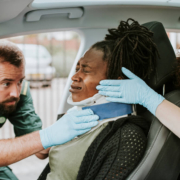
- Whiplash and Neck Injuries: The violent side-to-side motion can strain or tear the soft tissues in the neck and upper back.
- Shoulder and Arm Injuries: The occupant closest to the point of impact may suffer a dislocated shoulder, torn rotator cuff, or broken bones in the arm or wrist.
- Hip and Leg Injuries: A direct impact on the side of the car can cause serious hip fractures, pelvic injuries, and broken leg bones.
- Traumatic Brain Injuries (TBIs): An occupant’s head can strike the side window or door frame with significant force, leading to concussions or more severe brain trauma.
- Spinal Cord Injuries: If the collision is forceful enough to contort the body, it can damage the vertebrae or the spinal cord itself, potentially causing paralysis.
- Psychological Trauma: The shock of the event can lead to lasting emotional and psychological conditions like anxiety, a phobia of driving, and Post-Traumatic Stress Disorder (PTSD).
What Steps Should I Take Immediately After a Sideswipe Accident?
The actions you take in the minutes and hours after a crash can have a significant impact on your health and your ability to bring a successful claim.
- Prioritize Safety: First, check yourself and your passengers for injuries. If anyone is hurt, call 911 immediately.
- Move to a Safe Location: If the vehicles are drivable and it is safe to do so, move them to the shoulder to avoid blocking traffic and prevent another collision.
- Exchange Information: Get the other driver’s name, address, phone number, driver’s license number, and insurance information. Also, be sure to get the license plate number of their vehicle.
- Document Everything: Use your phone to take pictures and videos of the damage to both cars, their positions on the road, skid marks, and any visible injuries.
- Do Not Admit Fault: When speaking to the other driver or the police, stick to the facts of what happened. Avoid saying things like “I’m sorry” or “I didn’t see you,” as this can be interpreted as an admission of fault.
- Find Witnesses: If anyone stopped to help or saw the accident, ask for their name and phone number. Their account could be very important later.
- Seek Medical Attention: Even if you feel fine, it is a good idea to get a medical evaluation. Adrenaline can mask pain, and some serious injuries, like whiplash or concussions, may not show symptoms for hours or days.
- Report the Crash: Notify your own insurance company that the accident occurred.
Contact Our Mississippi Car Accident Attorneys
Navigating the claims process while trying to recover from your injuries can be overwhelming. The legal team at Gardner Law Group is dedicated to helping accident victims in Mississippi secure their futures. We can provide the guidance you need to make informed decisions about your case. To discuss your situation, please call us at (228) 436-6555 or fill out our online contact form to schedule a consultation.