
What Should I Do After a Hit-and-Run Accident in Mississippi?
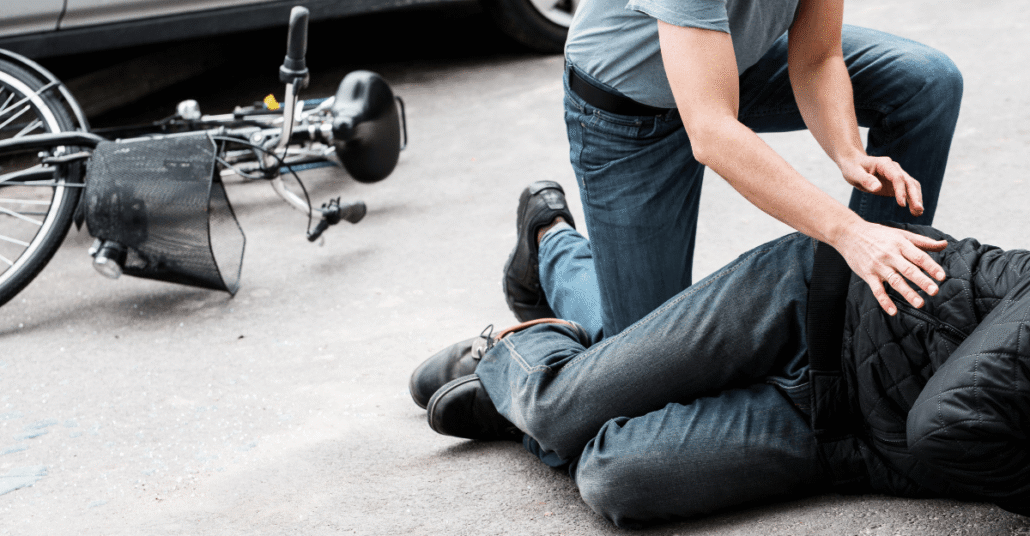
The immediate aftermath of a vehicle collision is a disorienting experience, defined by the sound of crushing metal and the sudden shock of impact. On the Mississippi Gulf Coast, this confusion is often compounded when the responsible party flees the scene. Whether it occurs on the busy stretch of Highway 90 in Biloxi or at a congested intersection near the Crossroads Shopping Center in Gulfport, a hit-and-run leaves victims facing physical pain and significant financial uncertainty.
What Are the Steps to Take After a Hit-and-Run in Mississippi?
After a hit-and-run accident in Mississippi, you must immediately move to a safe location, call 911 to report the crash, and document the scene. Contacting law enforcement is a legal requirement that creates an official record necessary for future insurance claims or legal action against the fleeing driver.
Once you have ensured your physical safety, the priority shifts to information gathering. Even if the other vehicle is gone, the environment holds critical clues. If possible, write down everything you remember about the fleeing vehicle: the make, model, color, and any partial license plate numbers. Look for witnesses among other drivers or pedestrians near local landmarks, such as the Island View Casino or the Port of Gulfport, who may have captured the incident on a dashcam or smartphone.
Furthermore, take high-resolution photographs of your vehicle’s damage and the surrounding roadway. In hit-and-run cases, “paint transfer,” where the fleeing car leaves a trace of its color on your vehicle, is vital forensic evidence. Following these steps helps build a foundation for your claim:
- Notify Law Enforcement: A police report is the cornerstone of any subsequent legal or insurance pursuit.
- Seek Medical Attention: Visit facilities like Memorial Hospital at Gulfport or Singing River Health System immediately to document injuries.
- Identify Surveillance: Check nearby businesses for security cameras that may have recorded the flight path of the defendant.
- Contact Your Insurer: Report the incident to your own carrier to initiate the Uninsured Motorist (UM) process.
How Does Uninsured Motorist Coverage Apply if the Driver Is Never Found?
In Mississippi, if a hit-and-run driver remains unidentified, your own Uninsured Motorist (UM) coverage typically treats the unknown driver as an “uninsured” entity. This allows you to file a claim against your own policy for medical bills, lost wages, and pain and suffering.
Many drivers in Harrison and Jackson counties are unaware that their own insurance policy acts as a primary safety net in these scenarios. Mississippi law requires insurers to offer Uninsured Motorist coverage, and unless you specifically rejected this coverage in writing, it is likely part of your policy. Because a hit-and-run driver has, by definition, failed to provide insurance information, they are classified as uninsured for the purposes of your recovery.
However, recovering from your own insurance company is not always a seamless process. Even though you are their customer, the insurer’s interests shift once a claim is filed. They may attempt to minimize the severity of your injuries or question the validity of the hit-and-run details. This is why having detailed medical records from local providers and a clear police report from the Biloxi or Gulfport Police Department is essential. Key aspects of UM coverage include:
- Bodily Injury UM: Covers your medical expenses, rehabilitation, and non-economic damages.
- Property Damage UM: Addresses the costs to repair or replace your vehicle, often with a lower deductible than standard collision coverage.
- Policy Limits: Your recovery is generally capped at the limits you selected when purchasing your policy.
- Multi-Vehicle Stacking: Depending on your policy language, you may be able to “stack” coverage if you have multiple vehicles insured.
Can I Recover Damages if I Am Partially at Fault for the Collision?
Yes, under Mississippi’s “pure comparative negligence” rule, you can still recover damages even if you contributed to the accident. Your total financial compensation will be reduced by your percentage of fault, but you are not barred from seeking justice even if you were 99% responsible.
In a hit-and-run context, insurance adjusters often try to shift blame onto the victim to reduce the payout. They might argue that your lane change on I-10 contributed to the collision or that you were speeding near the Dedeaux Road exit. Because Mississippi does not use a “modified” rule (which cuts off recovery at 50% fault), you maintain the right to pursue the remaining portion of your damages. For instance, if your total damages are $100,000 and you are found 20% at fault, you would still be entitled to $80,000.
Overcoming these allegations of fault requires a thorough investigation. We often work with accident reconstructionists who analyze skid marks, vehicle rest positions, and electronic data to prove the fleeing driver’s negligence. Demonstrating that the other driver’s flight from the scene was an admission of guilt or “consciousness of guilt” can also be a powerful factor in negotiations. Strategies to protect your recovery include:
- Forensic Analysis: Using experts to prove the mechanics of the crash.
- Consistent Statements: Ensuring your account of the accident remains steady across medical and police records.
- Avoiding Recorded Statements: Refraining from giving the insurance company statements that can be twisted to imply fault.
Navigating the Complexities of Commercial Hit-and-Run Cases
When the vehicle that flees the scene is a commercial truck, the complexity of the case increases exponentially. The highways of the Pine Belt and the Gulf Coast, including Highway 49 and Highway 98, are heavily trafficked by heavy freight moving toward the Bayou Casotte Industrial Center. If a tractor-trailer causes an accident and fails to stop, the legal framework involves federal regulations as well as state law.
The Tower of Insurance and the MCS-90 Endorsement
Commercial carriers often utilize a “tower” of insurance, starting with a primary liability policy and extending into multimillion-dollar umbrella layers. If the truck is identified later, these layers become accessible. However, if the carrier’s insurance attempts to deny coverage because the driver violated company policy by fleeing, the federal MCS-90 endorsement may act as a safety net. This endorsement ensures that the public is protected and that a judgment can be satisfied even if the underlying policy terms were breached.
Investigating Fleet Data and ELDs
Modern commercial vehicles are equipped with Electronic Logging Devices (ELDs) and GPS tracking. Even if a driver flees the scene of a crash near the Port of Gulfport, forensic data specialists can often cross-reference the timing of the accident with fleet movement data. Identifying the specific trucking company allows us to issue evidence preservation letters to ensure that logbooks and “black box” data are not overwritten or destroyed.
Protecting Your Rights on the Mississippi Gulf Coast
The path to recovery after a hit-and-run accident is paved with procedural hurdles and aggressive insurance tactics. At Gardner Law Group, we pride ourselves on our deep connection to the Mississippi Gulf Coast community. We have the resources to conduct exhaustive investigations, from pulling surveillance footage near the Island View Casino to analyzing commercial fleet records. Our focus is on ensuring that the lack of an identified driver at the scene does not mean a lack of justice for your family. We navigate the insurance “towers” and the complexities of Mississippi’s comparative negligence laws so you can focus on healing.
Contact us to schedule a consultation with our experienced legal team or complete our online contact form.
