
How to Prove Negligence in Accidents Caused by Distracted Drivers in Mississippi
A commute along Interstate 10 in Gulfport or driving through the busy intersections near Highway 49 can change in a fraction of a second. One moment the traffic ahead is flowing smoothly, and the next, you are facing a severe collision because another motorist chose to glance at a smartphone instead of watching the road. The immediate aftermath of a car wreck brings confusion, physical pain, and sudden financial pressure. Emergency medical care at facilities like Singing River Hospital or Merit Health Biloxi rapidly turns into mounting medical bills, while missed time from work creates immediate income disruption.
What Elements Are Required to Prove Negligence in a Mississippi Distracted Driving Case?
Navigating a civil personal injury claim requires establishing that the at-fault motorist failed to meet statutory legal standards. In Mississippi, every person who operates a motor vehicle assumes a legal duty to exercise reasonable care to avoid harming others on the road. When a driver chooses to engage in activities that divert their attention away from safe vehicle operation, they violate that standard.
Establishing civil liability requires demonstrating four foundational legal components by a preponderance of the evidence:
- Duty of Care: Demonstrating that the defendant had an obligation to operate their vehicle safely, obey traffic laws, and maintain proper lookout for other motorists.
- Breach of Duty: Proving the driver failed to meet that standard of care by taking their hands off the wheel, eyes off the road, or mind off the task of driving.
- Causation: Establishing a direct legal link showing that the driver’s specific distraction directly produced the crash (proximate cause), rather than an unavoidable external hazard.
- Compensable Damages: Showing that you suffered actual, quantifiable losses such as bodily injury, lost wages, or vehicle damage as a direct consequence of the collision.
Driver distraction typically falls into three main operational categories: visual distraction (taking eyes off the roadway), manual distraction (taking hands off the steering wheel), and cognitive distraction (taking mental focus away from driving). Activities like texting or browsing social media combine all three forms of distraction simultaneously, creating an extreme hazard on high-speed corridors like Interstate 55 or Lakeland Drive.
How Does Mississippi’s Texting While Driving Statute Establish Negligence Per Se?
Proving a breach of duty in standard negligence claims often requires extensive argument regarding what a reasonable driver would or would not do under similar circumstances. However, when a motorist violates a specific safety law designed to protect the public, state jurisprudence allows injured victims to utilize the doctrine of negligence per se.
Under Mississippi Code Section 63-33-1, it is illegal for a driver to write, send, or read a text message, or to access and post to social networking sites using a hand-held mobile device while operating a motor vehicle. When law enforcement issues a traffic citation at the crash scene for violating this statute, or when subsequent electronic discovery confirms a violation occurred at the moment of impact, the legal framework shifts significantly.
Key advantages of leveraging negligence per se in a personal injury claim include:
- Automatic Breach Determination: The court accepts the statutory violation as definitive proof that the driver breached their legal duty of care without requiring additional subjective proof.
- Targeted Evidentiary Focus: The legal dispute transitions away from debating whether the driver’s conduct was careless and focuses entirely on proving that the illegal distraction directly caused your injuries.
- Strengthened Settlement Positioning: Insurance carriers face heightened liability exposure when faced with a clear statutory violation, often facilitating more productive settlement negotiations.
What Physical and Digital Evidence Proves a Driver Was Distracted?
At-fault drivers rarely admit to law enforcement officers or insurance adjusters that they were looking down at a mobile device prior to a collision. Because driver distraction often lasts only a few seconds, establishing proof requires gathering diverse physical, documentary, and electronic evidence before it is lost or destroyed.
The legal team focuses on gathering several critical categories of evidence immediately following an accident:
- Official Law Enforcement Reports: Investigating officer notes, field diagrams, traffic citations, and recorded driver statements contained within the official Mississippi Uniform Crash Report.
- Cellular Carrier Timestamps: Detailed call logs, text transmission records, and cellular data usage metrics obtained directly from mobile network providers.
- Vehicle Black Box Telematics: Electronic Control Module (ECM) data recording vehicle speed, throttle position, steering angle inputs, and brake application timing in the seconds leading to impact.
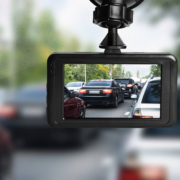
- Surveillance and Dashcam Video: Video footage secured from nearby commercial security cameras, Mississippi Department of Transportation (MDOT) traffic monitoring units, or private dashcams.
- Eyewitness Testimonial Accounts: Statements from passenger occupants, surrounding drivers, or bystanders who personally observed the driver looking down, swerving, or failing to react to stopping traffic.
Preserving this evidence demands immediate action. Digital files, security camera footage, and cellular carrier logs are routinely deleted or overwritten during standard corporate data retention cycles unless formal legal notices are served.
How Can Cell Phone Records and Subpoenas Uncover Driver Distraction?
Cellular devices continuously exchange data signals with cell towers and application servers. When an individual sends a text message, opens a social media feed, streams a video, or places a phone call, the network provider creates a precise digital record with time-stamped activity metrics.
While an at-fault driver will not voluntarily hand over their personal phone at the scene of a crash along Highway 90, formal civil discovery rules permit personal injury attorneys to compel the production of these records once a lawsuit is filed. Cellular service providers like AT&T, Verizon, and T-Mobile retain detailed records that can be accessed through proper legal channels.
The process of uncovering electronic distraction involves several technical steps:
- Serving Preservation Letters: Transmitting formal spoliation of evidence letters to the driver and their mobile carrier immediately, placing them under legal obligation not to destroy or clear phone data.
- Issuing Subpoenas duces tecum: Obtaining court orders compelling cellular providers to produce detailed call detail records (CDRs) and data transaction logs covering the timeframe of the crash.
- Corroborating Impact Timestamps: Matching the exact minute and second of the collision as established by 911 dispatch logs, emergency response records, or black box telemetry against incoming or outgoing phone data activity.
If the electronic records demonstrate that a text message was transmitted, an application was opened, or a stream of data was actively being requested during the exact seconds leading up to impact, it provides powerful evidence that visual or manual distraction caused the wreck.
What Role Do Accident Reconstruction Experts Play in Proving Distraction?
In complex car accident claims where the at-fault driver denies being distracted or claims that traffic stopped unexpectedly, technical accident reconstruction becomes an invaluable tool. Reconstruction professionals combine engineering principles, physics, and forensic analysis to recreate the physical sequence of events.
When evaluating a distracted driving crash, reconstruction specialists examine physical indicators that reveal a driver’s attention level:
- Absence of Tire Skid Marks: Attentive drivers instinctively apply hard braking when a hazard appears, leaving distinct pre-impact tire friction marks. A total lack of skid marks strongly suggests the driver never looked up to see the hazard.
- Unfiltered Impact Velocity: Calculating vehicle momentum and structural crush deformation to demonstrate that the at-fault car struck the lead vehicle at full cruising speed without decelerating.
- Delayed Perception and Reaction Time: Comparing standard human perception-reaction times (typically 1.5 seconds) against physical scene data to prove the driver experienced an abnormal delay in recognizing stopping traffic.
By pairing reconstruction findings with cellular data logs, expert witnesses can present clear visual presentations to insurance claims adjusters or circuit court juries, demonstrating exactly how driver distraction directly led to the crash.
How Does Mississippi’s Pure Comparative Negligence Law Affect Your Claim?
Insurance carriers frequently attempt to avoid paying full claim value by alleging that the injured victim shared responsibility for the collision. They may claim you were speeding slightly, changed lanes abruptly, or failed to take evasive action to avoid their distracted policyholder.
Understanding how comparative fault operates under state law is essential for protecting your financial recovery. Under Mississippi Code Section 11-7-15, the state operates under a pure comparative negligence doctrine. Unlike states that bar recovery if an injured party is 50% or 51% at fault, Mississippi allows crash victims to recover damages regardless of their degree of fault, provided they were not 100% responsible.
Consider how pure comparative fault applies in practice:
- Assessing Total Damages: A court or jury determines that your total economic and non-economic losses equal $200,000 following a severe collision on Highway 49.
- Assigning Percentage of Fault: The jury finds the distracted driver 90% at fault for texting behind the wheel, but assigns 10% fault to you for driving slightly over the posted speed limit.
- Calculating Net Financial Recovery: Your overall $200,000 award is reduced by 10% ($20,000), resulting in a final enforceable recovery of $180,000.
Because insurance companies aggressively use comparative fault arguments to devalue legitimate claims, gathering firm evidence of the other driver’s total distraction is vital to minimize any fault improperly assigned to you.
What Compensation Can You Recover in a Mississippi Distracted Driving Lawsuit?
Severe injuries sustained in a car crash often create immediate financial hardship alongside long-term physical recovery challenges. Under Mississippi personal injury law, crash victims have the legal right to seek comprehensive compensatory damages from the negligent party’s liability insurance policy.
Compensatory damages are divided into two distinct primary categories under state law:
- Economic Damages (Quantifiable Financial Losses): Full coverage for all emergency room care at facilities such as the University of Mississippi Medical Center (UMMC), surgery costs, physical therapy sessions, prescription medications, future medical treatments, vehicle replacement, and complete lost wages, including lost future earning capacity.
- Non-Economic Damages (Quality of Life Losses): Financial recovery for physical pain and suffering, mental anguish, physical impairment, permanent disfigurement, emotional trauma, and loss of enjoyment of life caused by severe physical injuries.
Properly calculating compensation requires thorough documentation of current medical expenditures and accurate forecasting of long-term rehabilitation costs. Our attorneys work directly with treating medical providers and economic analysts to document the full scope of harm caused by distracted motorists.
What Are the Critical Deadlines for Filing a Distracted Driving Claim in Mississippi?
Time is one of the most vital factors in building a successful car accident claim. Mississippi statutory law establishes strict time limits, known as statutes of limitations, within which an injured party must formally file a civil lawsuit in court. Failing to meet the applicable deadline forever bars you from recovering financial compensation.
Key statutory filing deadlines under state law include:
- Standard Personal Injury Claims: Under Mississippi Code Section 15-1-49, the general statute of limitations for civil personal injury actions is three years from the date of the collision.
- Government and Municipal Vehicles: Under Mississippi Code Section 11-46-11 (the Mississippi Tort Claims Act), collisions involving state, county, or municipal vehicles require formal written notice of claim within one year of the accident date, followed by specific mandatory waiting periods.
- Claims Involving Deceased Victims: If a distracted driving accident results in a fatal injury, wrongful death actions must also strictly follow statutory filing timelines measured from the date of death.
Beyond formal statutory deadlines, initiating an investigation early is essential. Physical evidence like roadway skid marks fades, commercial video surveillance gets overwritten, and witness memories naturally fade over time. Retaining legal counsel promptly ensures critical evidence is preserved immediately.
Contact Gardner Law Group After a Distracted Driving Collision in Mississippi
Recovering from severe physical injuries after a car accident requires strong legal representation dedicated to protecting your rights and financial stability. Managing medical treatment while dealing with aggressive insurance adjusters creates unnecessary stress during a difficult time. At Gardner Law Group, our experienced personal injury attorneys represent crash victims across Jackson, Gulfport, Biloxi, Pascagoula, Ocean Springs, and throughout central and coastal Mississippi.
Our legal team operates on a contingency fee basis, meaning you pay no upfront legal costs or attorney’s fees unless we successfully recover financial compensation on your behalf. Contact our office today to schedule a free, confidential case evaluation with our attorneys to discuss your rights and learn how we can assist with your recovery.
Frequently Asked Questions About Distracted Driving Claims in Mississippi
What should I do at the crash scene if I suspect the other driver was texting?
Inform the responding police officer about your observations so they can note potential distraction in the official crash report. Seek immediate medical attention, take photos of vehicle damage and roadway conditions, exchange insurance details, and avoid discussing fault with the other driver or their insurance adjuster.
Can I get compensation if the distracted driver did not receive a traffic ticket?
Yes. Criminal or traffic citations are handled separately from civil personal injury claims. While a ticket for texting while driving helps establish negligence per se, you can still prove civil liability without a citation by utilizing subpoenaed cell phone records, black box data, and accident reconstruction evidence.
How long does an insurance company have to respond to a distracted driving claim in Mississippi?
Insurance carriers in Mississippi are required under state insurance regulations to acknowledge and investigate claims in a timely manner, typically responding within 15 to 30 days of receiving a formal demand. However, complex claims involving disputed distraction or severe injuries may require extended negotiations or formal litigation.
What if the distracted driver claims I slammed on my brakes unexpectedly?
This is a common defense tactic designed to shift fault onto you. Under Mississippi’s pure comparative negligence standard, even if you had to stop abruptly for a hazard, a driver following behind is legally required to maintain a safe following distance and stay attentive. Evidence such as ECM black box data can prove the rear driver failed to react due to distraction.
Does hands-free phone use still count as distracted driving under Mississippi law?
While Mississippi’s specific texting ban focuses primarily on hand-held typing and social media usage, hands-free phone conversations still create significant cognitive distraction. Even if hands-free use is not a direct statutory traffic violation under Section 63-33-1, it can still be used in court as evidence of standard common-law negligence.
How does a spoliation letter prevent a distracted driver from deleting text messages?
A spoliation letter is a formal legal notice sent to the driver, their insurance company, and their mobile service carrier warning them of impending litigation and demanding the preservation of electronic evidence. Once notified, deleting data or destroying records can result in severe court sanctions, including evidentiary penalties during trial.