
How Trucking Company Negligence Can Lead to Catastrophic Accidents
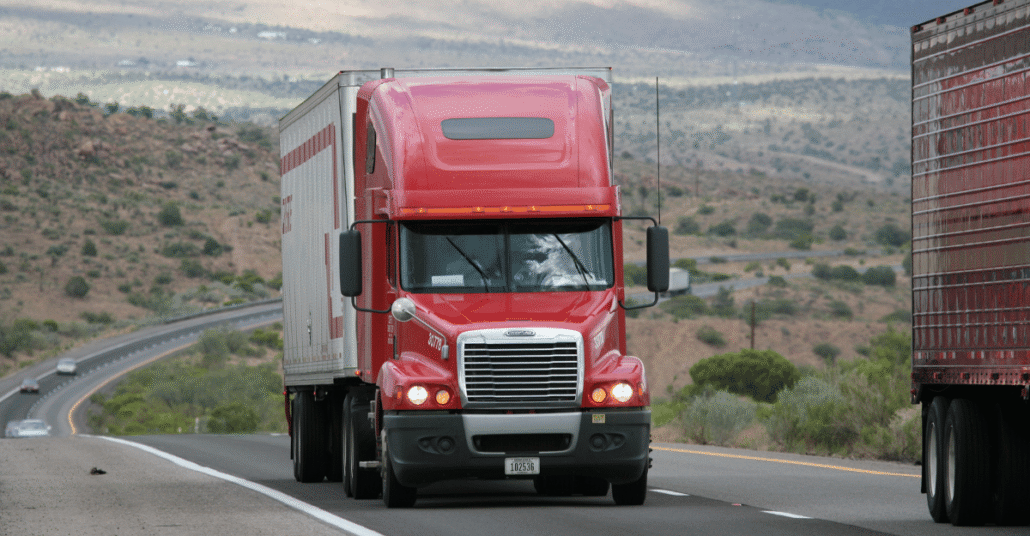
A fully loaded 18-wheeler traversing Interstate 10 through Gulfport or hauling freight down U.S. Highway 49 toward Jackson weighs up to 80,000 pounds. When a commercial vehicle of that size collides with a standard 3,000-pound passenger car, the structural impact is immediate and devastating.
In the aftermath of a highway crash along Mississippi’s busiest shipping corridors, public attention naturally focuses on the truck driver. Naturally, even victims of delivery truck crashes in MS wonder if the driver was speeding, distracted by a mobile device, or struggling with severe physical fatigue behind the wheel. Did you know that getting hit by a city garbage truck in MS also brings complications?
Yet behind many catastrophic highway collisions lies a deeper legal reality: the individual truck driver was merely operating within a flawed corporate structure. Commercial motor carriers operate under strict federal safety regulations and state legal duties designed to protect public safety. When trucking companies cut operational corners, enforce aggressive delivery windows, defer necessary fleet maintenance, or employ under-qualified operators, they create hazardous roadway conditions that make severe collisions almost inevitable.
What Is the Difference Between Driver Negligence and Trucking Company Negligence?
Distinguishing between individual driver error and corporate negligence is fundamental when pursuing personal injury claims after a commercial vehicle crash. When a truck driver makes an operational mistake, such as failing to check a blind spot during a lane change on Interstate 55 or misjudging braking distance near the Port of Pascagoula, the civil legal system applies the doctrine of vicarious liability. Under this rule, a motor carrier is held financially responsible for negligent acts performed by an employee acting within the course and scope of their employment duties.
Direct trucking company negligence represents a distinct legal claim. Direct corporate liability arises when the motor carrier breaches independent legal duties owed to the traveling public. These corporate decisions occur in executive offices long before a truck enters the highway, prioritizing operational efficiency over safety compliance. Primary forms of direct trucking company negligence include:
- Negligent Hiring Practices: Failing to verify a driver’s prior commercial record, license status, or medical examiner certifications prior to dispatching them on public roads.
- Negligent Entrustment: Assigning an 80,000-pound commercial vehicle to an inexperienced or notoriously reckless driver who presents a clear risk to other motorists.
- Negligent Supervision and Retention: Retaining a commercial driver who accumulates repeated safety violations, falsifies logbooks, or causes preventable crashes.
- Systemic Deferred Maintenance: Failing to perform routine fleet inspections, operating vehicles with worn braking components, or ignoring mechanical defects to avoid vehicle downtime.
In personal injury litigation across Mississippi circuit courts, injured parties frequently plead both vicarious liability and direct corporate negligence. Establishing direct carrier negligence allows access to internal corporate records, proving that systemic company policies directly contributed to the collision.
How Does Negligent Hiring and Retention Put Unsafe Drivers on Mississippi Roads?
Commercial motor carriers engaging in interstate commerce are subject to stringent safety guidelines governed by the Federal Motor Carrier Safety Regulations. Specifically, Title 49, Part 391 of the Code of Federal Regulations mandates detailed qualification files for all commercial drivers. Before allowing an employee to operate a commercial tractor-trailer, the carrier must perform thorough pre-employment screening.
Federal regulations require motor carriers to execute several mandatory verification steps during the hiring process:
- Motor Vehicle Record (MVR) Reviews: Obtaining and analyzing official driving records from every state where the applicant held a license over the preceding three years.
- Safety Performance History Inquiries: Contacting prior commercial employers from the past three years to evaluate safety performance, accident histories, and disciplinary records.
- Drug and Alcohol Clearinghouse Queries: Checking the national database to verify the applicant has no unresolved drug or alcohol testing violations.
- Medical Examiner Certification: Confirming the driver has successfully passed a physical examination by a certified medical examiner and holds a valid medical card.
When a motor carrier skips mandatory background verifications, overlooks past reckless driving convictions, or hires individuals with documented substance abuse issues, the company commits negligent hiring. Furthermore, direct corporate liability extends to negligent retention when safety managers fail to suspend, re-train, or terminate drivers who accumulate safety infractions while employed.
Why Is Inadequate Vehicle Maintenance a Major Source of Carrier Liability?
Commercial tractor-trailers operate under intense mechanical stress. Hauling thousands of pounds of freight across Interstate 10, U.S. Highway 90, and state highways causes rapid wear on tires, braking systems, and steering assemblies. Under 49 CFR Part 396, motor carriers have a non-delegable duty to systematically inspect, repair, and maintain all commercial motor vehicles within their fleet.
When motor carriers delay maintenance to reduce operating costs, severe mechanical defects emerge that endanger all road users:
- Brake System Malfunctions: Failing to replace worn friction pads, neglecting air brake adjustments, or ignoring hydraulic leaks. Brake failure prevents a driver from stopping in emergency traffic situations, leading to high-impact rear-end collisions.
- Tire Tread Separation and Blowouts: Operating trailers with worn, retreaded, or improperly inflated tires. A sudden blowout at highway speed can cause loss of vehicle control or send tire debris into oncoming traffic lanes.
- Coupling Assembly Defects: Neglecting fifth-wheel and kingpin locking mechanisms. A failure in the coupling assembly can cause a loaded trailer to separate from the tractor while traveling at speed.
- Steering and Suspension Failures: Ignoring worn tie rods, power steering fluid leaks, or damaged leaf springs, leaving the driver unable to steer around roadway hazards.
Post-accident investigations into mechanical failure crashes frequently reveal documented maintenance deferrals, ignored driver vehicle inspection reports (DVIRs), or skipped service intervals. In these cases, the corporate decision to cut fleet maintenance expenses directly causes the resulting crash.
What Role Do Overloaded or Improperly Secured Cargo Loads Play in Wrecks?
Proper cargo loading and securement are critical to commercial vehicle handling and stability. Motor carriers and commercial freight loaders must comply with gross vehicle weight ratings (GVWR) and federal cargo securement rules under 49 CFR Part 393. Exceeding legal weight limits places severe strain on tires and brakes, increasing the distance required to bring a heavy vehicle to a complete stop.
In addition to overall weight, how cargo is distributed and tied down inside a trailer directly affects vehicle dynamics during transit:
- Elevated Center of Gravity: Improperly stacked or top-heavy freight raises the vehicle’s center of gravity. When turning onto highway ramps near Biloxi or making evasive maneuvers, an unbalanced truck is susceptible to rollover accidents.
- Internal Cargo Shifts: If cargo is not secured using approved tiedowns, blocking, or bracing, heavy freight can shift during braking or turns. A sudden shift in weight distribution pulls the trailer sideways, causing the driver to lose control or jackknife.
- Spilled Freight Hazards: Flatbed trailers transporting lumber, steel coils, or heavy machinery present extreme dangers if securement straps fail. Cargo falling onto active roadways creates immediate multi-vehicle crash hazards.
Whether the motor carrier loaded the trailer with internal personnel or failed to inspect cargo loaded by a third party, the carrier remains legally responsible for ensuring freight is safely secured before dispatch.
What Evidence Proves a Motor Carrier Was Negligent in a Commercial Crash?
Building a civil personal injury claim against a commercial trucking company requires securing technical, operational, and digital evidence before records are routinely overwritten or purged. Commercial crash investigations involve examining extensive corporate records that do not exist in standard passenger car cases.
Critical evidence categories in commercial motor carrier litigation include:
- Electronic Logging Device (ELD) Records: Digital logs that track driving hours, duty status, and rest periods, serving as objective evidence of hours-of-service compliance or violations.
- Event Data Recorder (EDR) Telemetry: Black box data recording vehicle speed, braking application, engine RPM, throttle position, and steering input in the seconds immediately before impact.
- Driver Qualification File (DQF): The motor carrier’s internal file containing employment applications, background checks, medical cards, driving records, and drug test results.
- Fleet Maintenance and Repair Logs: Work orders, inspection sheets, and repair receipts demonstrating whether the truck received required maintenance prior to the trip.
- Video Camera Footage: Forward-facing and cabin dashcam video documenting driver behavior, road conditions, and traffic patterns preceding the collision.
Because commercial carriers may overwrite digital sensor data or destroy paper records after standard retention periods elapse, prompt legal action is vital. Issuing a formal spoliation of evidence letter to the trucking firm and its insurer places them under a legal obligation to preserve all relevant physical and electronic data.
How Does Mississippi Comparative Negligence Impact Trucking Lawsuits?
Mississippi follows a pure comparative fault rule under Mississippi Code Section 11-7-15. Even if a passenger vehicle driver shares partial responsibility for a collision, they can still recover financial compensation from a negligent trucking company, though their total award is reduced proportionally by their percentage of fault.
Defense legal teams representing commercial motor carriers often try to assign blame to passenger vehicle drivers to limit corporate financial exposure. Under Mississippi Code Section 11-7-15, Mississippi operates under a pure comparative negligence standard. This statute protects injured drivers from losing their right to financial recovery even if their actions contributed in part to the crash.
Under pure comparative negligence, financial awards are adjusted based on the proportion of fault assigned to each party. For example, if a jury determines that an injured driver sustained $1,000,000 in economic and non-economic damages but attributes 10 percent of fault to the driver for speed and 90 percent to the trucking firm for brake failure, the net recovery is $900,000.
Furthermore, Mississippi Code Section 85-5-7 governs liability allocation among multiple defendants. In non-intentional tort claims, joint and several liability is generally abolished, meaning defendants are held severally liable for their specific percentage of fault. Identifying all potentially liable entities including motor carriers, maintenance contractors, and third-party loaders is critical to securing complete financial recovery.
What Financial Compensation Is Available to Victims of Commercial Truck Crashes?
Victims of catastrophic truck accidents in Mississippi can recover economic damages, including medical bills, future rehabilitative costs, and lost wages. Non-economic damages compensate for physical pain, emotional suffering, and permanent disfigurement, subject to Mississippi’s statutory one-million-dollar cap on non-economic recovery in civil tort actions.
The physical trauma resulting from an 18-wheeler collision is frequently severe. Victims often suffer traumatic brain injuries, spinal cord damage, severe fractures, or internal organ injuries. Civil personal injury claims allow injured parties to seek compensation across several distinct damage categories:
- Economic Damages: Measurable financial losses, including emergency medical treatment, hospital stays, surgical costs, physical therapy, specialized equipment, lost wages, and reduced earning capacity.
- Non-Economic Damages: Compensation for physical pain, emotional distress, mental anguish, loss of enjoyment of life, and permanent physical impairment or disfigurement.
- Statutory Non-Economic Recovery Cap: Under Mississippi Code Section 11-1-60, non-economic damages in civil personal injury lawsuits are subject to statutory limitations. While medical malpractice non-economic damages are capped at $500,000, general civil tort non-economic recovery carries a statutory cap of $1,000,000. This statutory limitation applies only to non-economic damages and does not restrict recovery for medical expenses or lost income.
Because federal regulations mandate commercial motor carriers to carry substantial public liability insurance coverage ranging from $750,000 to over $5,000,000 depending on freight classification recovering fair compensation requires navigating complex corporate insurance policies.
Contact Gardner Law Group After a Commercial Vehicle Crash
Recovering from serious physical injuries after a commercial truck wreck requires knowledgeable legal guidance capable of handling complex corporate litigation. Investigating motor carrier negligence, preserving digital ELD evidence, and managing legal deadlines requires prompt attention.
Our attorneys at Gardner Law Group represent crash victims and surviving family members throughout Pascagoula, Ocean Springs, Biloxi, Gulfport, and across Jackson County and South Mississippi. We represent clients on a contingency fee basis, meaning you pay no attorney fees unless we successfully recover financial compensation in your case.
If you or a family member was injured in a collision with a commercial truck, contact our office today to schedule a free, confidential case evaluation.
Frequently Asked Questions About Trucking Accidents in Mississippi
How long do I have to file a trucking accident lawsuit in Mississippi?
Under Mississippi Code Section 15-1-49, the general statute of limitations for filing a personal injury claim following a commercial truck collision is three years from the date of the accident. If the collision resulted in a fatality, a wrongful death lawsuit must generally be filed within three years. Speaking with an attorney promptly helps ensure critical evidence is preserved before statutory deadlines expire.
Can I sue both the truck driver and the trucking company for my injuries?
Yes, an injured party can name both the truck driver and the commercial motor carrier as defendants in a lawsuit. The driver is held liable for individual operational negligence behind the wheel, while the trucking company can be held vicariously liable for employee actions and directly liable for corporate negligence such as negligent hiring or improper maintenance.
What is a spoliation of evidence letter in a commercial truck crash case?
A spoliation of evidence letter is a formal legal notice delivered to the commercial carrier, its safety officers, and its insurance company. This notice demands the immediate preservation of all crash-related records, including black box telemetry, ELD records, driver qualification files, cabin video footage, and physical truck components, preventing the carrier from destroying or overwriting evidence.
What if the trucking company claims the driver was an independent contractor?
Commercial motor carriers often attempt to avoid legal liability by classifying drivers as independent contractors. However, under federal regulations and state law, if the carrier controls the driver’s routes, dictates delivery schedules, or leases equipment under its operating authority, the carrier can still be held liable for resulting crashes regardless of worker classification.
How much commercial insurance coverage do trucking companies carry in Mississippi?
Federal Motor Carrier Safety Administration rules require commercial freight carriers to carry substantial liability coverage. Minimum requirements start at $750,000 for non-hazardous freight in vehicles over 10,000 pounds and increase up to $5,000,000 for hazardous material transport, providing dedicated insurance resources for catastrophic injury claims.