
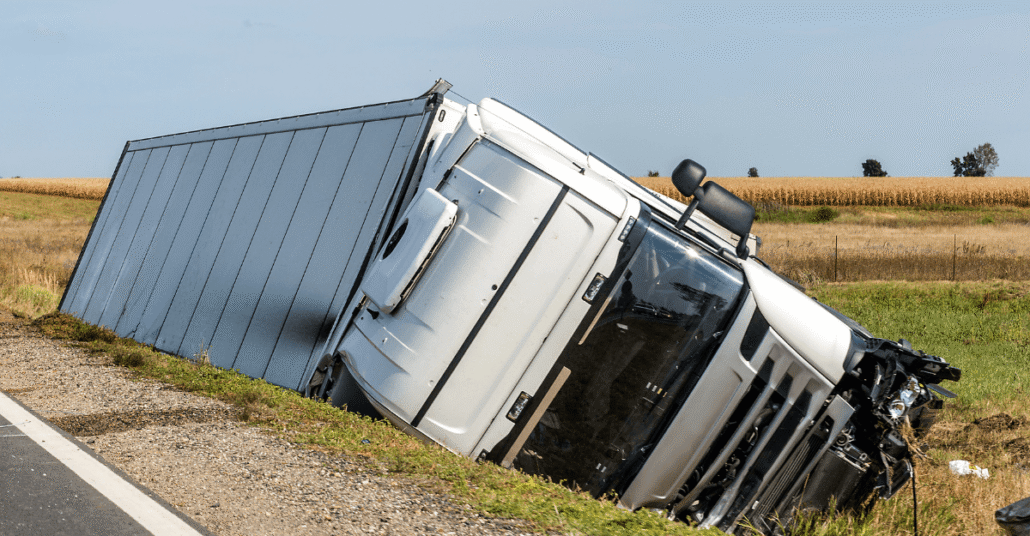
Why Are Trucking Accident Cases So Much More Complicated Than Car Crashes?
The moments following a severe collision on the Mississippi Gulf Coast blur together in a sudden rush of adrenaline, flashing emergency lights, and deep physical trauma. When an 18-wheeler wreck occurs on a busy corridor like Interstate 10, the immediate aftermath is defined by disorientation and mounting medical concerns. Before the visible wounds are fully treated, the legal landscape surrounding your physical recovery shifts dramatically.
Standard passenger vehicle collisions typically involve relatively straightforward traffic laws, local police reports, and personal auto insurance policies. Commercial transport incidents introduce a highly technical web of strict federal regulations, massive corporate insurance policies, and highly organized rapid defense strategies. The sheer size and weight discrepancy between a fully loaded tractor-trailer and a standard sedan means the physical damage is exponentially worse, and the legal battle to secure fair compensation is significantly more demanding.
How Do Federal Trucking Regulations Change the Legal Process?
Commercial truck accidents are uniquely complicated because they are governed by an extensive framework of federal oversight. Passenger car accidents are generally evaluated under local and state traffic codes. Conversely, commercial truck drivers and the massive freight companies that employ them must adhere to strict guidelines enforced by the Federal Motor Carrier Safety Administration (FMCSA).
These detailed regulations dictate almost every functional aspect of the commercial transport industry. Title 49 of the Code of Federal Regulations establishes strict Hours of Service rules designed specifically to prevent severe driver fatigue. When a commercial driver exceeds these maximum legal driving limits to meet an aggressive, unrealistic delivery schedule, their physical reaction times drop significantly, mimicking the impairment levels of an intoxicated driver.
Identifying violations of these federal standards provides a powerful, objective mechanism for establishing negligence. A knowledgeable legal team meticulously investigates the driver’s qualification files, mandatory random drug screening results, medical certifications, and detailed vehicle maintenance logs to uncover any regulatory failures that directly contributed to the catastrophic collision.
Who Can Be Held Liable for a Commercial Truck Crash?
If another commuter rear-ends you at a stoplight in Pascagoula, liability usually rests squarely on that specific driver. In a complex semi-truck crash, responsibility frequently extends far beyond the individual behind the steering wheel. Injured victims can often pursue claims against a web of interconnected corporate entities.
The legal doctrine of vicarious liability allows injured parties to hold the primary trucking company financially responsible for the negligent actions of their employed drivers. Furthermore, employers routinely face separate claims of derivative negligence if they fail to perform adequate background checks, ignore previous driving infractions, or skip mandatory safety training protocols when hiring new operators.
Depending on the exact circumstances of the incident, liability might also fall on third-party cargo loaders. If a logistics company improperly secured a heavy load or failed to balance the cargo weight correctly, it can cause the trailer to roll over or jackknife across multiple lanes of traffic. If a catastrophic mechanical failure caused the incident, the manufacturer of a defective commercial braking system or a faulty steering column could also be held strictly accountable.
What Types of Evidence Are Unique to Commercial Vehicle Collisions?
A standard auto accident investigation heavily relies on police reports, eyewitness statements, and simple roadway skid marks. Big rig accidents generate a massive amount of highly technical, proprietary electronic data that paints a highly accurate picture of the final seconds before impact. Unlike standard passenger vehicles, commercial trucks are heavily monitored data centers on wheels.
This unique evidentiary record includes:
- Electronic Logging Devices (ELDs) that track precise driving hours, engine run times, and required rest periods to verify federal compliance.
- Engine control modules, frequently referred to as black boxes, which record exact vehicle speed, braking application force, and sudden deceleration moments before impact.
- Dashcam footage showing both the driver’s perspective of the roadway and the interior view of the cab, which can prove distracted driving.
- Dispatch communications, satellite GPS routing histories, and digital bills of lading.
Protecting this technical data is an absolute immediate priority. Commercial freight carriers are legally permitted to destroy certain records and overwrite digital logs after a relatively short period. Sending a formal spoliation of evidence preservation letter immediately legally compels the corporate entity to secure these critical items before they mysteriously vanish.
Why Do Trucking Companies Deploy Rapid Response Teams?
While you are seeking critical emergency care at local facilities like the Singing River Health System, major trucking corporations are already working aggressively to protect their financial interests. These corporate entities do not wait for the police report to be finalized.
Major motor carriers retain dedicated rapid response teams consisting of highly trained field investigators, accident reconstructionists, and specialized defense attorneys. They deploy to the crash site immediately, sometimes arriving before the twisted wreckage is completely cleared from the interstate. Their primary objective is to control the narrative, mitigate any damaging physical evidence, and limit the corporation’s overall financial liability before the injured victim has the opportunity to hire legal representation.
These response teams interview witnesses while memories are fresh, carefully document the scene from strategic perspectives that favor their defense, and look for any environmental factors they can blame for the crash. This highly coordinated corporate effort places unrepresented victims at a severe, calculated disadvantage from day one.
How Do Commercial Insurance Policies Differ from Personal Auto Coverage?
The minimum liability limits required for a commercial motor vehicle far exceed those mandated for personal passenger automobiles. Due to the massive potential for widespread destruction, federal regulations require commercial interstate carriers to maintain policies worth hundreds of thousands, and frequently millions, of dollars.
Because the financial stakes are exceptionally high, commercial insurance adjusters fight relentlessly to minimize payouts. They are not simply processing a standard property damage claim; they are protecting a massive corporate bottom line. These seasoned professionals are highly trained negotiators who utilize complex, multi-layered defense strategies to deny liability completely or severely dispute the long-term severity of your physical injuries.
Securing fair, comprehensive compensation means pushing back against these corporate representatives with undeniable, objective medical documentation and irrefutable electronic crash data.
What Role Does Mississippi Comparative Negligence Play in Truck Accidents?
Mississippi operates under a pure comparative negligence legal standard. Under Mississippi Code Section 11-7-15, your financial recovery can be reduced by your formally assigned percentage of fault for the accident. This means if a jury determines you were ten percent responsible for the collision, your final financial award is reduced by that exact ten percent.
Trucking defense lawyers frequently weaponize this specific statute to unfairly shift the blame onto the passenger vehicle driver. If you were merging into traffic on Highway 90 when the tractor-trailer violently struck your vehicle, the defense team might aggressively argue that you failed to yield properly or misjudged the distance, attempting to drastically reduce their financial exposure.
Overcoming these aggressive blame-shifting tactics requires clear, undeniable evidence of the commercial driver’s absolute negligence and failure to maintain proper control of their heavy vehicle.
How Does the Three-Year Statute of Limitations Affect Evidence Gathering?
State law provides a very specific window for taking formal legal action after an injury. Under Mississippi Code Section 15-1-49, victims generally have three years from the exact date of the crash to officially file a personal injury lawsuit in the civil court system.
However, waiting to pursue a claim is exceptionally dangerous when dealing with commercial trucking incidents. While the strict legal filing deadline may be three years away, practical evidentiary deadlines arrive much sooner. Federal trucking regulations allow motor carriers to legally destroy critical driver logbooks and mandatory vehicle inspection reports after just six months. If you delay initiating a comprehensive investigation, the most compelling electronic evidence proving the commercial driver’s severe fatigue or the corporation’s poor maintenance history will simply be erased.
What Compensation Is Available for Catastrophic Injuries on the Mississippi Gulf Coast?
The staggering size and weight of an 18-wheeler typically result in catastrophic, life-altering physical trauma for the occupants of the passenger vehicle. A comprehensive settlement or jury verdict must deeply account for the complete, permanent disruption to your daily life and financial stability.
Available financial compensation following a commercial vehicle incident typically includes:
- Economic damages for immediate emergency transportation, complex orthopedic surgeries, and ongoing intensive physical rehabilitation at respected facilities like Pascagoula Hospital.
- Lost wages and significantly diminished future earning capacity if your permanent physical limitations prevent you from returning to physically demanding, well-paying work at major local employers like Ingalls Shipbuilding.
- Non-economic damages that address profound physical pain, severe mental anguish, post-traumatic stress associated with interstate travel, and the complete loss of enjoyment of your life.
When demanding compensation for these invisible injuries, it is highly necessary to understand state-specific statutory damage limits. Under Mississippi Code Section 11-1-60, compensation for non-economic damages is statutorily capped at one million dollars for general personal injury cases. Securing the maximum allowable recovery up to this limit requires relentless advocacy and heavily detailed medical documentation proving how the sustained injuries have permanently altered your daily routine.
How Do Pre-Existing Medical Conditions Affect Truck Crash Settlements?
Commercial insurance adjusters thoroughly search through your lifetime medical history looking for any plausible reason to devalue your injury claim. If you suffered a minor lower back injury playing sports a decade ago, the corporate adjuster will likely argue that your current chronic pain was not caused by the recent semi-truck impact, but is merely a continuation of that old injury.
The civil justice system protects victims with underlying conditions. You are fully entitled to financial compensation if the undeniable negligence of a commercial driver aggravated, accelerated, or significantly worsened a pre-existing physical issue. Proving this clear distinction relies heavily on establishing a highly consistent medical treatment history and reaching maximum medical improvement under the direct guidance of your local orthopedic physicians and neurologists. Your doctors will document the exact baseline of your health before the crash and detail the specific new damage caused by the high-speed impact.
When Is It Necessary to File a Lawsuit in Jackson County Circuit Court?
While many personal injury claims eventually resolve through out-of-court negotiations, initiating formal litigation frequently becomes necessary when commercial insurance adjusters refuse to negotiate fairly, consistently deny liability, or present insulting settlement offers that fail to cover your projected medical needs. The experienced legal team at Gardner Law Group understands the incredibly heavy burden a catastrophic commercial vehicle collision places on local families throughout the Gulf Coast.
We are deeply familiar with the tactics utilized by corporate trucking defense teams and know precisely how to counter them effectively with undeniable evidence. Our primary focus is on handling the complex federal regulations, preserving the vital electronic evidence before it disappears, and managing the aggressive commercial insurance adjusters so that you can concentrate entirely on your physical recovery.
If you or a loved one suffered devastating injuries in a tractor-trailer crash in Pascagoula, Moss Point, or the surrounding Jackson County areas, contact us today to schedule a free, comprehensive consultation.
Frequently Asked Questions
How long does a commercial truck accident settlement take in Mississippi?
The timeline depends heavily on the severity of your physical injuries and the corporate trucking company’s willingness to negotiate fairly. While relatively straightforward cases might resolve in several months, highly complex commercial claims involving disputed liability, multiple at-fault parties, or permanent physical impairments requiring lifelong medical care can take well over a year to reach a fair, comprehensive resolution.
Can I still recover damages if the police report says I was partially at fault?
Yes. Mississippi’s pure comparative negligence standard explicitly allows you to recover financial compensation even if law enforcement or a jury finds you partially responsible for the collision. Your final financial award will simply be reduced proportionally by your specific percentage of fault. A knowledgeable attorney can challenge inaccurate police reports that improperly assign blame to you.
What should I say to the commercial insurance adjuster who calls me?
You are under no legal obligation to provide a recorded statement or discuss the details of your medical condition with the at-fault commercial driver’s insurance company. Adjusters are trained to ask leading questions designed to minimize your payout. The safest approach is to politely decline the conversation and direct all their corporate inquiries directly to your legal representative.
Who pays my medical bills while my truck crash claim is pending?
Your personal health insurance typically covers your initial emergency medical treatments and ongoing care while your legal claim is actively pending. Once a favorable settlement is reached or a jury verdict is successfully awarded, a specified portion of those recovered funds will be utilized to satisfy any medical liens placed by your health insurance provider or local hospital facilities.
Why do I need a specific trucking attorney instead of a general car accident lawyer?
Commercial vehicle cases require distinct, highly specific knowledge of the Federal Motor Carrier Safety Administration regulations, the urgent preservation of unique electronic data like engine control modules, and the ability to counter the aggressive mitigation strategies employed by corporate rapid response teams. These cases operate on a completely different level of complexity than standard auto claims.
Will my commercial truck accident case go to trial in Jackson County?
The vast majority of civil injury claims resolve successfully through negotiated out-of-court settlements. Your case will only proceed to a formal jury trial if the commercial insurance carrier outright refuses to negotiate in good faith or fails to offer compensation that accurately reflects the full, devastating extent of your economic and non-economic damages.